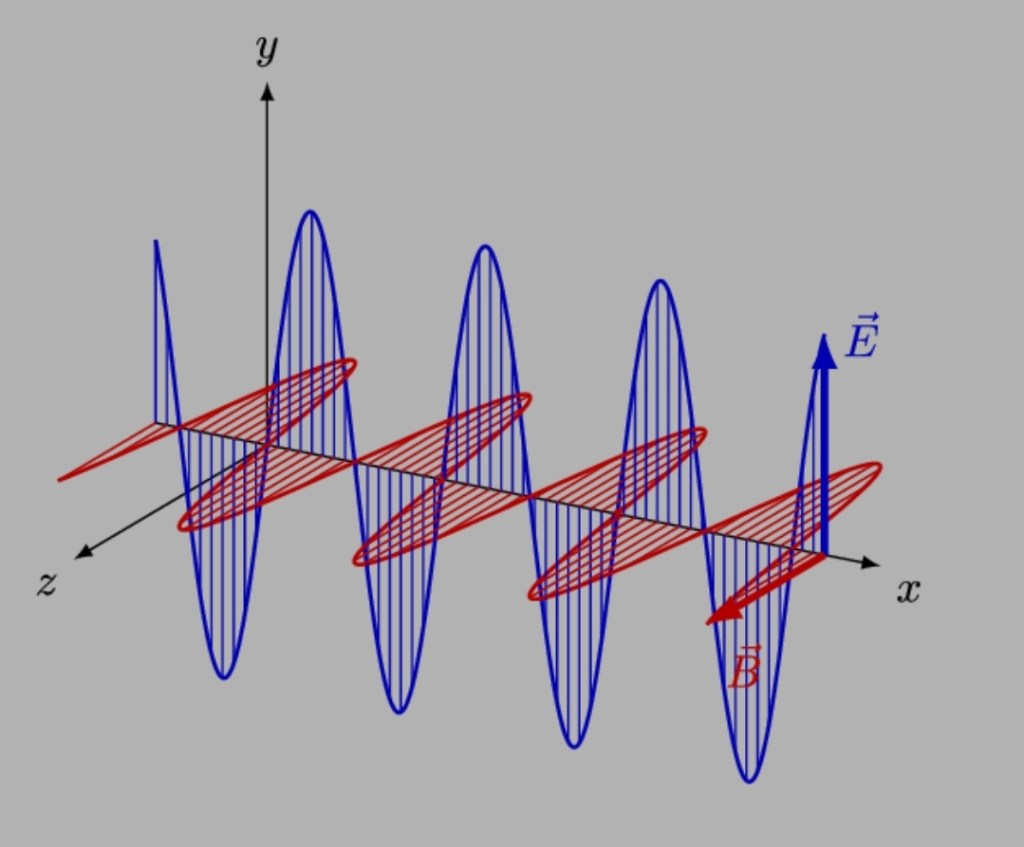
Welcome to Project Event Horizon, where we embark on a journey into the mind-bending world of quantum mechanics. In this article, we will delve into the intriguing concept of quantum superposition, a fundamental principle that challenges our classical understanding of reality. Prepare to have your mind expanded as we explore the mysterious nature of particles existing in multiple states simultaneously.
Unveiling Quantum Superposition:
Quantum superposition is a phenomenon that arises from the principles of quantum mechanics. At the quantum level, particles such as electrons or photons can exist in a state of superposition, where they simultaneously occupy multiple states or locations until measured or observed. This fascinating concept suggests a fundamental duality, blurring the boundaries between classical notions of particles and waves.
The Wavefunction and Superposition:
In quantum mechanics, particles are described by wavefunctions, which mathematically represent the probabilities of different states. A wavefunction can be understood as a combination of various possibilities, each with an associated probability amplitude. These possibilities can correspond to different positions, energies, or other measurable properties of the particle.
When a particle is in a superposition of states, its wavefunction encompasses multiple possibilities. For example, an electron can be in a superposition of being in two different positions simultaneously. This implies that the electron does not have a well-defined position until it is measured, as it can be thought of as existing in a smeared-out state of potentialities.
The Measurement Problem and Wavefunction Collapse:
The act of measurement or observation brings about a remarkable change in the behavior of a quantum system. When a measurement is made, the particle’s wavefunction undergoes a process called wavefunction collapse. This collapse causes the particle to be „chosen“ or „found“ in a specific state or location, with all other possibilities fading away.
The exact nature of wavefunction collapse is still a subject of debate and interpretation within quantum mechanics. Several interpretations, such as the Copenhagen interpretation or the many-worlds interpretation, offer different explanations and philosophical perspectives on how wavefunction collapse occurs.
Experimental Evidence:
Quantum superposition and wavefunction collapse have been experimentally verified in numerous experiments. One famous example is the double-slit experiment, where particles, such as electrons or photons, exhibit wave-like properties. When fired through two slits, they create an interference pattern on a screen, suggesting their simultaneous existence as waves passing through both slits. However, upon measurement or observation, they behave like particles, appearing as distinct points on the screen.
Implications and Applications:
The existence of quantum superposition has profound implications for our understanding of reality. It challenges our classical intuition and expands our perspective on the fundamental nature of particles. Quantum superposition also forms the basis for quantum computing, where the ability of quantum bits (qubits) to exist in superpositions enables exponentially increased computational power.
Conclusion:
Quantum superposition is a captivating concept that challenges our perception of reality. It reveals a mysterious world where particles can exist in multiple states or locations simultaneously until measured or observed. Through ongoing research and experimentation, scientists continue to unlock the secrets of quantum mechanics, pushing the boundaries of our understanding and paving the way for exciting technological advancements.
At Project Event Horizon, we invite you to delve deeper into the enigmatic realm of quantum mechanics, where the extraordinary becomes ordinary, and reality dances to the tune of uncertainty. Join us as we uncover the mysteries of the universe, one quantum leap at a time.

 Project Event horizon